Skip to content
The Glow Guide Browse Med Spas
Treatment Guide

Chemical Peels in Chicago & Northwest Indiana

A chemical peel is a controlled exfoliation — an acid solution lifts away damaged outer layers of skin so fresher, more even skin can take their place. Here’s how light, medium, and deep peels differ, what they cost around Chicagoland and NWI, and how to pick a provider who matches the peel to your skin.

Updated June 2026 · Local pricing data · No paid placements

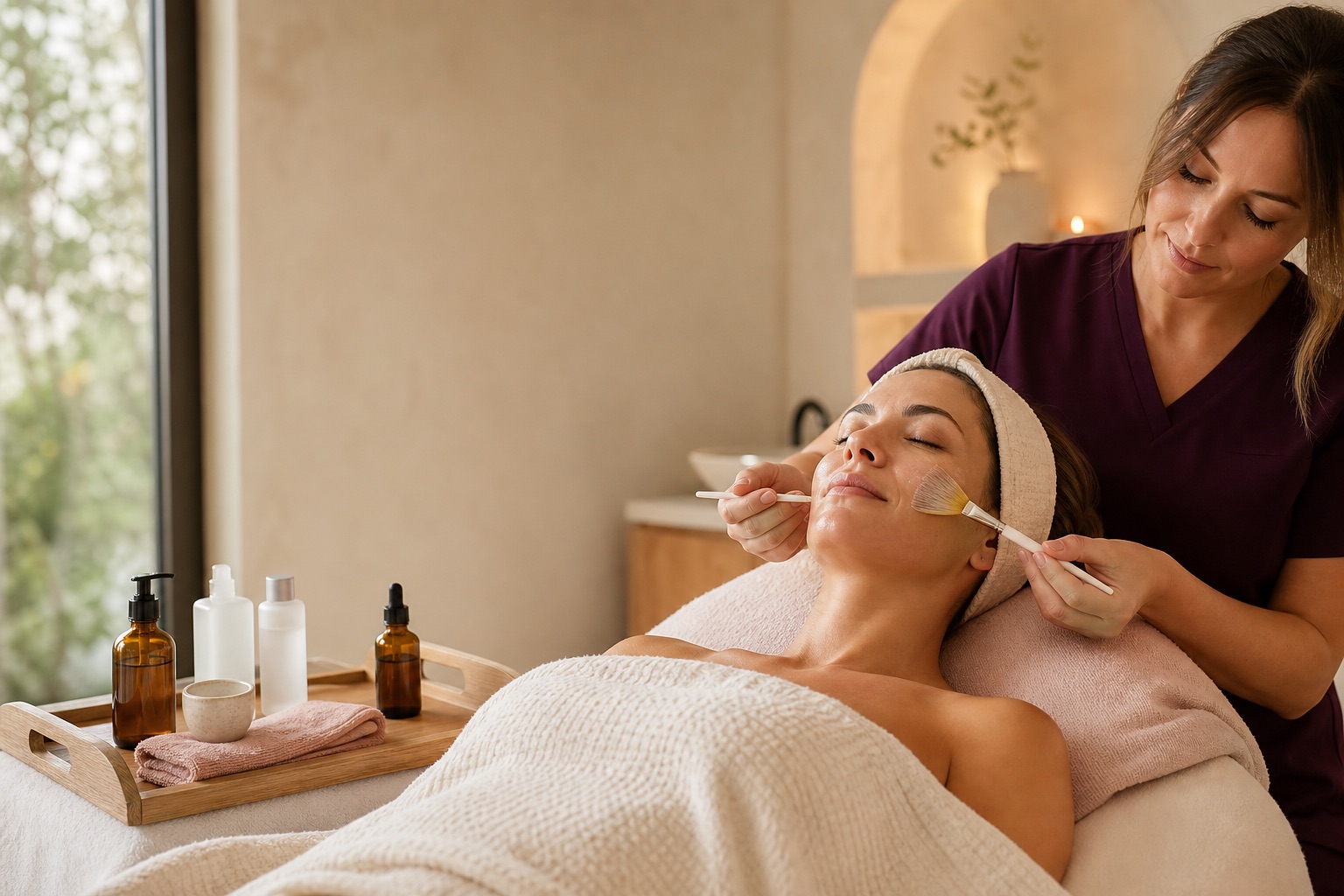
Esthetician in plum scrubs brushing a gentle peel solution onto a relaxed client's cheek in a warm, daylight-filled med spa facial room
The honest explainer

What a Chemical Peel Actually Does

A peel works by dissolving the bonds that hold dead, damaged cells to the surface of your skin. The provider paints on an acid solution — the “chemical” part is less scary than it sounds — and over the following days that top layer sloughs off, taking sun spots, dullness, and shallow imperfections with it. What grows back is newer skin with faster cell turnover.

Depth is everything, and it’s how every consult should start. Light (superficial) peels use gentle acids like glycolic or lactic — a quick “lunchtime” treatment with little more than a day of mild flaking. Medium peels, usually TCA (trichloroacetic acid), reach further down to treat etched-in sun damage, deeper discoloration, and fine lines — with several days of visible peeling. Deep peels are genuine medical procedures done under physician supervision, reserved for significant damage.

The timeline is honest but unglamorous: most sessions take 30–60 minutes, and with medium peels the flaking peaks around days 3–5 before fresh skin emerges by the end of the week. Results scale with depth too — a light peel buys you a month or two of glow, a medium peel holds for several months to a year, and a deep peel can last a decade or more.

Know what a peel won’t do. It removes damaged surface layers, but it doesn’t rebuild collagen structure underneath — for acne scars and firmness, microneedling is usually the better tool — and it won’t tighten loose skin or out-resurface a strong laser. For deeper, longer-lasting resurfacing, compare it against laser skin resurfacing before you book either one.

One scheduling tip locals have figured out: fall and winter are peel season around here. Your new skin is extremely sun-sensitive, so Chicago’s gray months are the ideal window — and every provider will send you home with strict sunscreen orders regardless.

You’re likely a good candidate if…

You’re bothered by sun spots, melasma or other hyperpigmentation, post-acne marks, rough texture, dullness, or fine lines — surface-level concerns are exactly what peels treat. Dermatologists consider peels safe and effective across ages; people in their 20s through their 60s and beyond get real results, often visible after a single session.

It’s probably not for you if…

You’re pregnant or nursing, have active cold sores, infections, or open skin in the area, have taken isotretinoin recently, or you’re freshly tanned. Deeper skin tones can absolutely peel safely — but depth and acid choice matter more, so insist on a provider experienced with your skin tone to avoid pigmentation problems.
Local pricing

What It Costs Around Here

Typical in the Chicago area: $150–$1,000+ per session, with the national average around $650. Depth sets the price — light peels at the low end, deep medical-grade peels at the top.

$150–$1,000+ / session

Light glycolic or lactic peels start near $150; medium TCA peels land mid-range; deep physician-supervised peels push past $1,000. NWI typically prices below downtown Chicago.

30–60 minutes

A typical session, start to finish. The appointment is quick — it’s the days of flaking afterward (peaking around days 3–5 on medium peels) that you plan around.

Months–years of results

Light peels hold a month or two and work best as a series; medium peels several months to a year; deep peels can last ten-plus years. Sunscreen stretches all of it.

What moves the price: peel depth first, then who applies it — a physician or nurse-led practice charges more than an esthetician doing light peels, and deep peels legitimately require medical supervision. Venue and neighborhood matter too; a Gold Coast med spa and a Valparaiso one can quote very different numbers for the same TCA peel. If a spa pitches a series, ask for the per-session math and whether a package actually discounts it.

Close to home

Find Chemical Peels by City

City guides cover the local market, typical pricing, and the spas your neighbors actually use — on both sides of the state line.

Independent picks

Med Spas Known for Skin Treatments

Strong, consistent reviews for facial and skin-resurfacing work across Chicagoland and NWI — surfaced by ratings, never by paid placement.

Real questions

Questions People Actually Ask

Straight answers on cost, downtime, and timing — the way a friend who works in aesthetics would give them.

What is the average cost of a chemical peel?

Around the Chicago area, chemical peels run $150–$1,000+ per session, and the national average lands near $650. Depth drives the price: a light glycolic peel sits at the low end, medium TCA peels in the middle, and deep medical-grade peels at the top. Northwest Indiana spas often price below downtown Chicago.

What is the downside of chemical peels?

Expect redness, visible flaking, and real sun sensitivity for days afterward — and with deeper peels, genuine downtime. The bigger risk is pigmentation changes, especially in deeper skin tones, when a peel is too aggressive or aftercare gets skipped. A trained provider who matches peel depth to your skin minimizes all of it.

What’s the worst day after a chemical peel?

For most people, days 3–5 — that’s when peeling reaches its peak and your face looks its worst. The first day or two you’re mostly red and tight; by day six or seven, fresh skin is showing through. Schedule medium peels around your calendar so peak flaking doesn’t land on event day.

How often should you have a chemical face peel?

It depends entirely on peel depth and your skin type. Light peels can repeat every four to six weeks as a maintenance series, medium peels a few times a year at most, and deep peels are often once-in-many-years events. A good provider maps the cadence to your skin goals at the consult — not to a package they’re selling.

Which one is better, microneedling or chemical peel?

They work from opposite directions: microneedling rebuilds structure from the inside by triggering collagen, while peels resurface from the outside by removing damaged layers. Peels excel at pigment, tone, and texture; microneedling at scars and firmness. Plenty of Chicago-area spas alternate the two — ask which one your actual concern calls for.

How long does a chemical peel last?

Anywhere from a few months to over a decade, depending on depth. Light peel results fade in a month or two without upkeep, medium peels hold for several months to a year, and a deep peel can keep paying off for ten-plus years. Daily sunscreen is what stretches every one of those numbers.

Ready to find your peel person?

Start with your town or jump straight to the directory — no accounts, no lead forms, no sales pressure. Just the local market, organized.

The Glow Guide difference

What to Ask at Your Consult

Five questions that separate a skin-first provider from a package-first one. Bring them to every consult — good providers love being asked.

  • Who applies the peel, and what depth are they qualified for? Estheticians can do light peels; medium and deep peels need nursing or physician-level oversight.
  • Which acid and what strength are you recommending — and why for my skin? “Our signature peel” isn’t an answer; glycolic, lactic, and TCA do different jobs.
  • What’s the exact session price, and does a series genuinely discount it? Ask for the per-session math before agreeing to a package.
  • What will days 1 through 7 actually look like for me? A provider who soft-pedals the flaking is selling, not advising.
  • Have you treated my skin tone at this depth? Can I see your own before-and-afters? Pigmentation risk is real — their results, not a brand’s brochure.

This guide is for information only — it isn’t medical advice. Always confirm credentials and suitability at your consult.